After your dog undergoes surgery at MrVet Hospitals or any veterinary clinic, proper nutrition is critical for healing. What your dog eats in the days and weeks following a procedure directly impacts wound healing, immune function, and recovery speed. Here is our vet-approved guide.
Thank you for reading this post, don't forget to subscribe!Learn about surgical care at MrVet Hospitals
The first 24 hours after surgery — go slow
Your dog will likely return home with reduced appetite due to anaesthesia. This is completely normal. For the first 12–24 hours, offer small amounts of water first. If water is kept down without vomiting, offer a small bland meal. Do not force-feed.
Recommended foods during recovery (days 1–7)
Bland diet (ideal for the first 2–3 days)
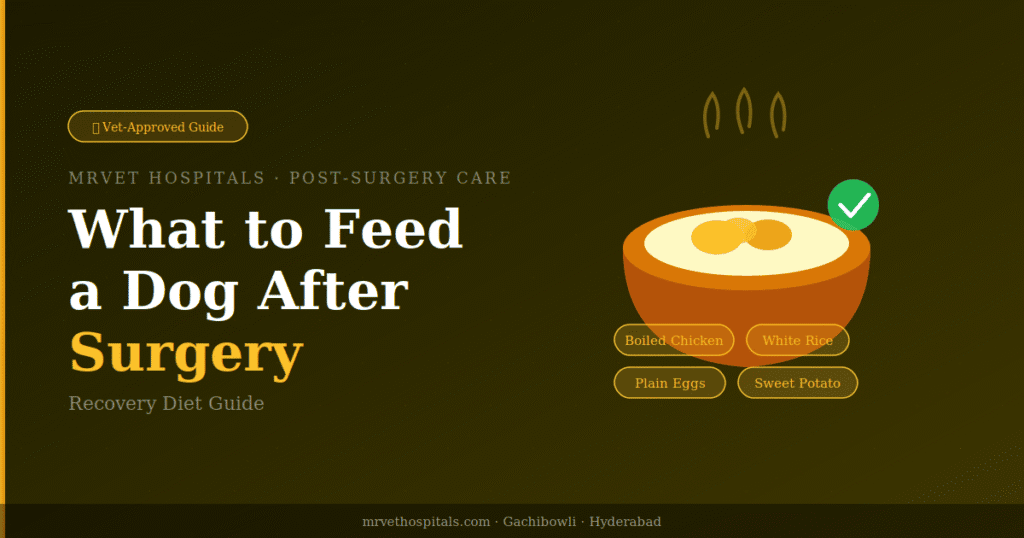
- Boiled white rice + boiled skinless chicken (no salt, no spices)
- Boiled rice + boiled pumpkin — excellent for dogs with post-surgical loose stools
- Scrambled eggs (plain, no butter) — highly digestible protein
- Boiled sweet potato
Transitioning back to regular food (day 4–7)
Gradually reintroduce your dog’s regular food by mixing 75% bland food + 25% regular food, increasing regular food proportions over 3–4 days.
Foods to avoid during recovery
- Rawhide chews, bones, or tough treats that require vigorous chewing
- Fatty foods or table scraps that can cause digestive upset
- High-fibre foods too early (can cause gas and discomfort)
- Any new food not approved by your vet
Nutritional support for wound healing
Protein is essential for tissue repair. Ensure your dog’s recovery diet includes adequate lean protein — chicken, fish, or eggs. Omega-3 fatty acids (found in fish oil) support inflammation reduction. Your vet may recommend a recovery-specific prescription diet for complex surgeries.
Hydration is critical
Ensure fresh water is always available. If your dog refuses to drink, add a small amount of low-sodium chicken broth to encourage intake. Dehydration after surgery slows healing significantly.
Not sure what to feed your dog after surgery at MrVet? Call us on +91 96767 55544. Our team is happy to provide specific dietary guidance for your dog’s procedure.
Dog vomiting causes and when to visit a vet
Frequently asked questions
Q: Can my dog eat normally after surgery?
A: Most dogs can return to their normal diet within 5–7 days of surgery. For the first few days, a bland, easily digestible diet is recommended. Follow your vet’s specific instructions.
Q: Why is my dog not eating after surgery?
A: Reduced appetite for 12–24 hours after surgery is normal due to anaesthesia effects. If your dog refuses food for more than 48 hours, contact your veterinarian.
Q: Is boiled chicken and rice good for dogs after surgery?
A: Yes. Boiled skinless chicken and white rice is the gold-standard bland diet for dogs post-surgery. It is highly digestible and gentle on the stomach.