
Category: Seasonal Pet Care | Hyderabad & Gachibowli
Thank you for reading this post, don't forget to subscribe!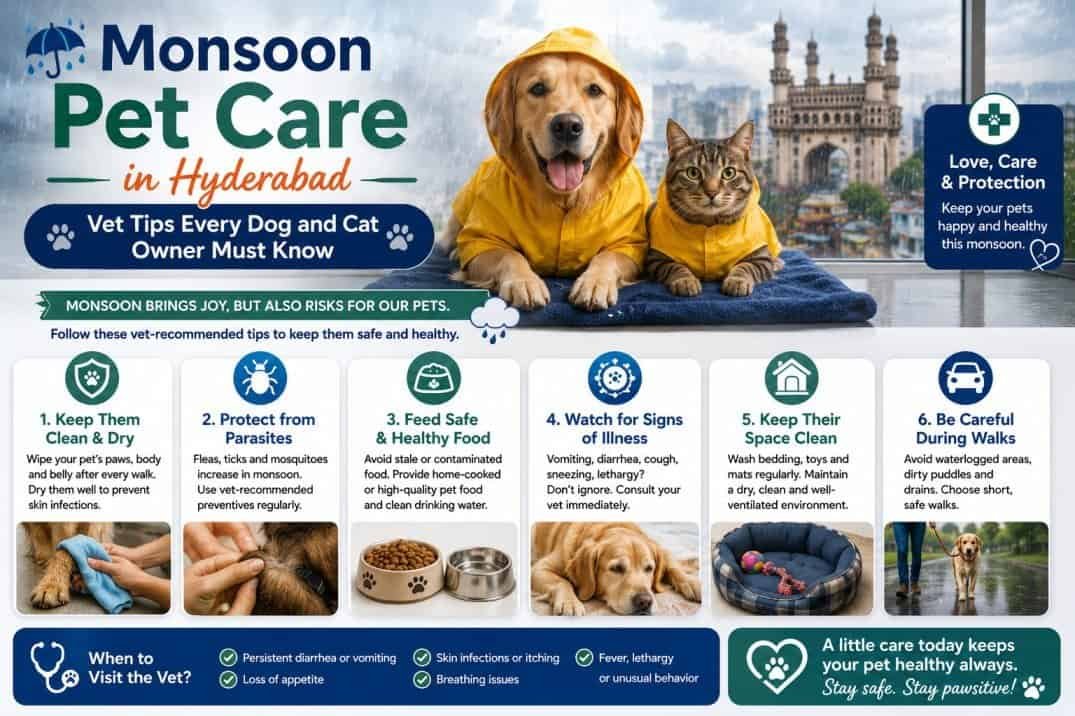
Hyderabad’s monsoon season typically arrives in June and lingers through September, bringing heavy rainfall, high humidity, and flooded roads. For most of us, the rains are a welcome relief from the scorching summer. For your pets, however, the monsoon introduces a unique set of health challenges that every responsible pet parent in Gachibowli, Kondapur, HITEC City, and across Hyderabad needs to prepare for.
At [Your Hospital Name], our vet hospital in Hyderabad sees a significant increase in monsoon-related cases every year — tick fever, leptospirosis, fungal paw infections, and respiratory illness. Here is what you need to know to keep your dog or cat safe through the rainy season.
Monsoon is peak tick season in Hyderabad. Ticks thrive in moist, grassy environments and become far more active during the rains. Symptoms to watch: Sudden high fever, lethargy, loss of appetite, pale gums, and joint pain. If your dog shows these signs during monsoon, visit a veterinary hospital in Hyderabad immediately — tick fever treated early responds well; delayed treatment can cause organ failure.
A bacterial infection spread through water or soil contaminated with the urine of infected animals. During monsoon, when streets flood, the risk for dogs walking through puddles is significant. Symptoms: High fever, severe muscle pain, vomiting, jaundice (yellow eyes or skin), and reduced urination. Prevention: Ensure your dog’s annual vaccination is current and includes the Leptospirosis component.
The combination of rain, humidity, and warmth creates ideal conditions for fungal growth. Breeds with floppy ears (Labradors, Beagles, Cocker Spaniels) are especially vulnerable. Signs: Excessive scratching, redness, flaking skin, hair loss, head shaking, or dark discharge from the ear canal.
Walking through wet grass, mud, and puddles leaves paws persistently damp — ideal for bacteria and fungi to proliferate. Signs: Licking or biting at paws, redness or swelling between toes, discharge, or a foul smell from the feet. Dry paws thoroughly after every outing.
Monsoon contamination of food and water sources increases the risk of GI illness. Avoid letting your dog drink from street puddles or eat food exposed to monsoon conditions.
Before the rains arrive, visit a pet hospital in Hyderabad and ensure the following are in order:
Go to your pet hospital in Hyderabad without delay if your pet shows:
Coat: Dry your pet thoroughly after every outing, especially under the belly, between the legs, and around the ears. Avoid letting your pet stay damp — prolonged moisture causes hot spots and fungal infections.
Ears: Inspect weekly during monsoon. Dogs with floppy ears need more frequent checks. Ask your vet about a gentle routine ear cleaner.
Paws: After every walk, rinse with clean water, dry completely between the toes, and apply a pet-safe paw balm every few days to maintain the skin barrier and prevent cracking.
Pre-monsoon vaccination camps • Tick prevention consultations • 24/7 emergency care
[Your Address], Gachibowli, Hyderabad – 500032
Call: [Your Phone Number]