
Just like puppies, kittens require vaccinations to protect them from dangerous infectious diseases. During the first few months of life, kittens are vulnerable to infections because their immune systems are still developing.
Following the kitten vaccination schedule in India ensures young cats grow into healthy adult pets.
Veterinarians recommend beginning vaccinations early to prevent serious illnesses.
Kittens initially receive antibodies from their mother’s milk, but this protection gradually decreases.
Vaccines help build long-term immunity against diseases.
Benefits of cat vaccination include:
Vaccination is an essential part of responsible pet ownership.
Veterinarians classify cat vaccines into core and non-core vaccines.
These vaccines are essential for all cats.
Core vaccines include:
These diseases can be life-threatening for kittens.
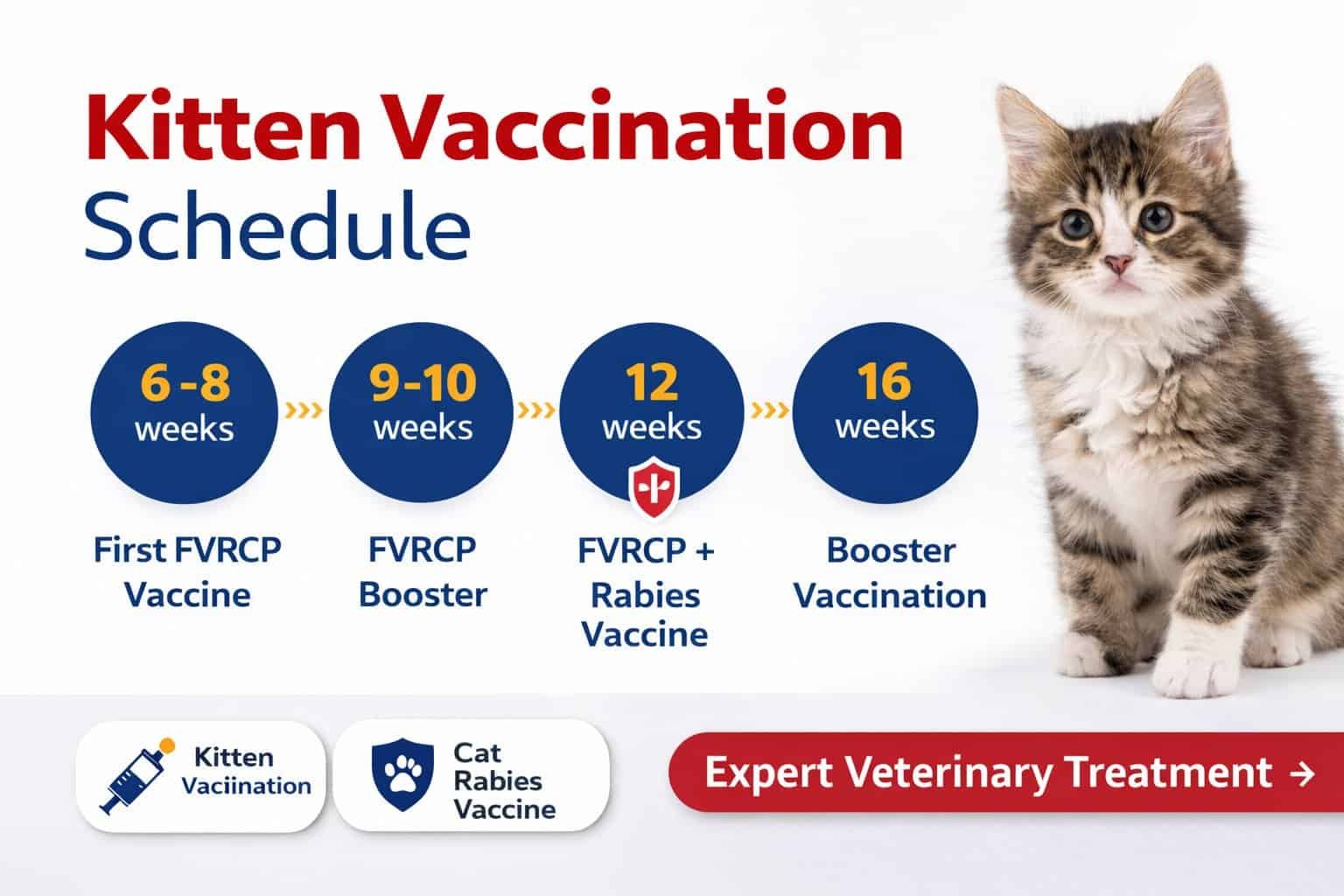
Typical cat vaccination schedule followed by veterinarians:
| Age | Vaccine |
|---|---|
| 6 weeks | FVRCP vaccine |
| 9 weeks | FVRCP booster |
| 12 weeks | FVRCP + rabies |
| 16 weeks | Booster |
Regular boosters maintain immunity throughout the cat’s life.
Rabies vaccination protects cats from a fatal viral disease that can also infect humans.
The cat rabies vaccine is typically given at 12 weeks of age.
Annual booster vaccinations are recommended.
The cost of cat vaccination Hyderabad varies depending on the veterinary clinic and vaccine type.
Typical costs include:
| Vaccine | Cost |
|---|---|
| FVRCP | ₹700 – ₹1200 |
| Rabies | ₹300 – ₹700 |
Vaccination packages may reduce costs for multiple vaccines.
Even vaccinated kittens should visit a vet if they develop symptoms such as:
Emergency veterinary services are available at:
Pet owners should follow these tips:
Following the recommended kitten vaccination schedule India protects kittens from life-threatening diseases.
Timely vaccination and regular veterinary visits ensure cats grow into healthy adult pets.