
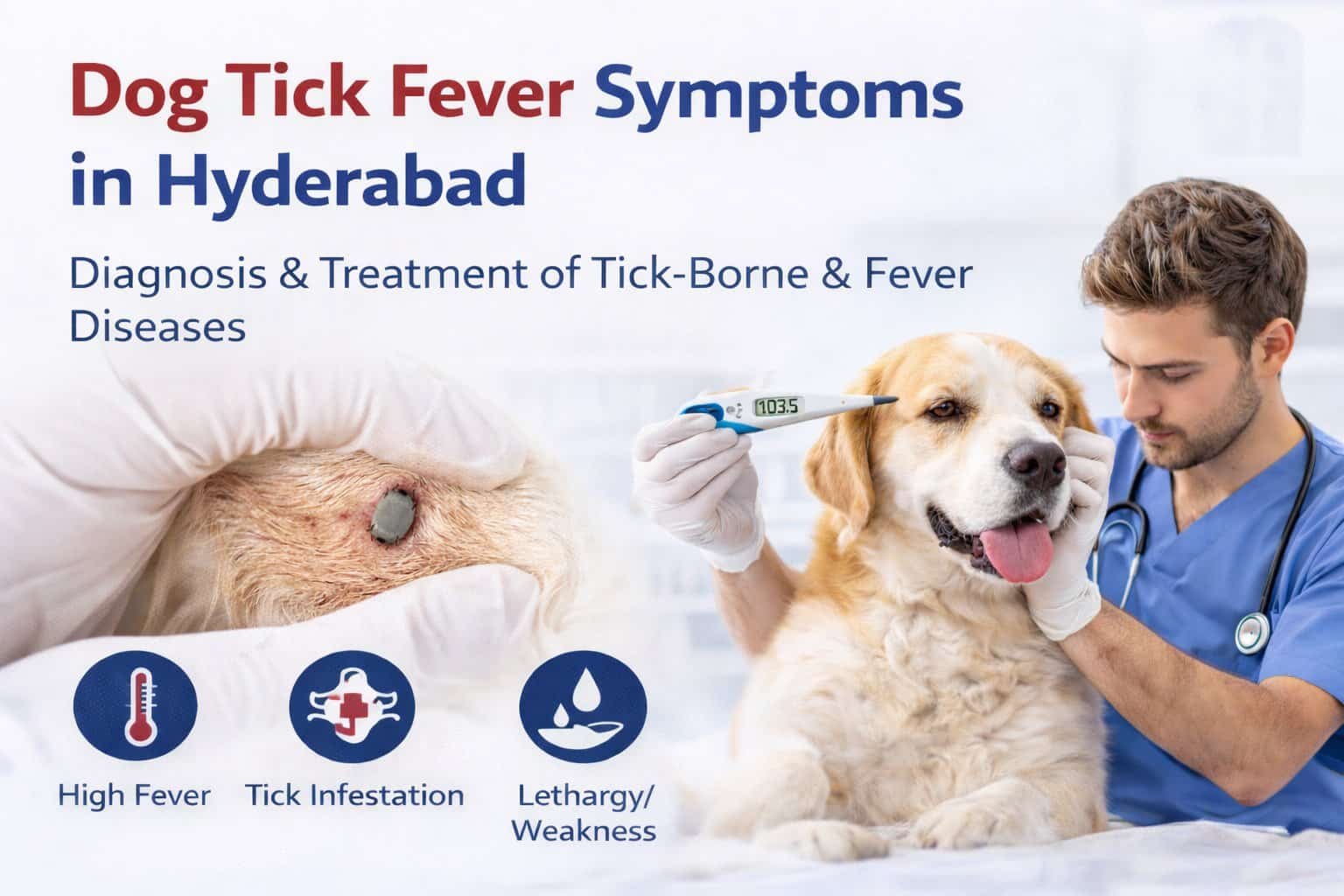
Tick fever is a serious disease affecting dogs, especially in tropical regions like India. The disease spreads through tick bites and can lead to severe health complications if untreated.
Recognizing dog tick fever symptoms early allows pet owners to seek timely veterinary treatment.
Veterinary hospitals frequently treat tick fever cases during warm seasons when ticks are more active.
Tick fever refers to infections caused by tick-borne pathogens such as:
These organisms infect the bloodstream and affect the dog’s immune system.
Ticks attach to a dog’s skin and feed on blood.
During feeding, infected ticks transmit disease-causing organisms into the bloodstream.
Dogs living in tick-infested environments have a higher risk of infection.
Pet owners should watch for the following dog tick fever symptoms:
Early symptoms may appear mild but can worsen rapidly.
In severe cases, dogs may develop:
Immediate veterinary care is necessary when symptoms worsen.
Veterinarians diagnose tick fever using:
Early diagnosis improves treatment success.
Treatment typically includes:
The most common dog tick fever treatment involves doxycycline antibiotics.
Treatment usually lasts 3–4 weeks.
Preventive care helps reduce the risk of tick infection in dogs.
Recommended prevention strategies include:
Veterinary consultation helps choose the right preventive products.
Pet owners should consult a veterinarian if their dog shows symptoms such as:
Professional diagnosis and treatment ensure proper recovery.
Tick fever is a common but serious disease in dogs. Recognizing dog tick fever symptoms early and seeking veterinary treatment helps prevent severe complications.
Regular tick prevention and veterinary checkups protect dogs from tick-borne diseases.