
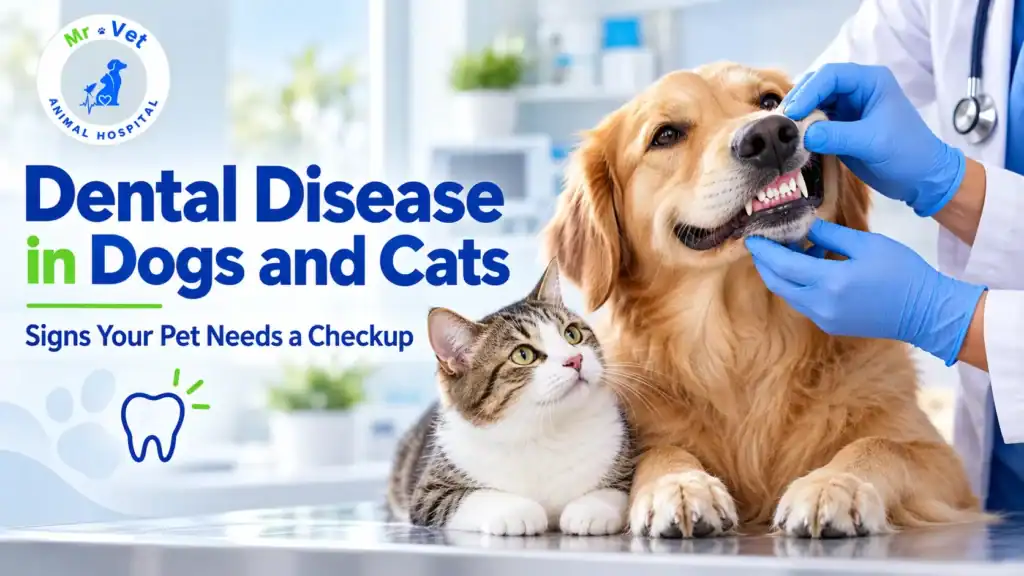
Has your dog’s breath become noticeably unpleasant? Does your cat approach their food, take a bite, and walk away? It is easy to overlook these changes, especially when your pet still seems playful.
Thank you for reading this post, don't forget to subscribe!Bad breath, red gums, difficulty eating, and broken or loose teeth are all reasons to arrange a dental checkup. Dogs and cats can have painful problems below the gumline even when their teeth look fairly clean. A veterinary examination is the best way to find out what is happening.
Signs your pet may have a dental problem
Watch for changes in your pet’s mouth and behaviour:
- Persistent bad breath
- Red, swollen, or bleeding gums
- Yellow or brown buildup on the teeth
- Drooling more than usual
- Dropping food, chewing on one side, or avoiding harder food
- Pawing at the mouth or resisting touch around the face
- A broken, loose, or missing tooth
- Swelling around the mouth or face
Some pets keep eating despite dental pain, so a normal appetite does not rule out a problem. Cats, in particular, may show only subtle changes in how they eat.
Is bad breath normal for dogs and cats?
A brief smell after a meal is different from persistent, strong bad breath. Ongoing bad breath can be a sign of oral disease and deserves a checkup. It can sometimes have causes outside the mouth too, so avoid assuming your pet simply needs a breath freshener.
What causes dental disease?
Plaque forms on teeth and can harden into tartar. Buildup around and beneath the gums can lead to inflammation and damage to the tissues supporting the teeth. This is called periodontal disease.
Pets can have other painful mouth problems as well, including fractured teeth. Tooth resorption, in which a tooth’s structure breaks down, is an important condition in cats. A glance at the visible teeth cannot reveal every problem beneath the gums or within a tooth.
When does your pet need a checkup?
Book a veterinary appointment if you notice any of the signs above, even if your pet is still eating. Routine oral checks matter too: the American Veterinary Medical Association recommends having a veterinarian check your pet’s teeth and gums at least once a year. Your vet may recommend a different schedule based on your pet’s needs.
Seek prompt veterinary care if your pet has facial swelling, a broken tooth, bleeding from the mouth, obvious pain, or difficulty eating. If your cat stops eating, contact a veterinarian without delay. Mouth pain is one possible cause, but a loss of appetite can also signal another illness.
What happens during a veterinary dental checkup?
A veterinarian will examine your pet’s mouth as thoroughly as they safely can while your pet is awake and discuss the signs you have noticed. If a deeper examination or professional cleaning is needed, they will explain the recommended procedure and assess your pet before anaesthesia.
A thorough dental procedure may include cleaning below the gumline, examining each tooth, and taking dental X-rays where indicated. Treatment depends on what is found. It could involve cleaning, care for an injured tooth, or removal of a tooth that cannot be saved. Simply scraping visible tartar from an awake pet cannot assess or treat disease hidden below the gums.
How can you care for your pet’s teeth at home?
Regular brushing with pet-specific toothpaste is one of the most useful steps. Introduce it gradually: let your pet get comfortable with you touching their muzzle and lifting their lip before trying to brush. Ask your vet to demonstrate a method that suits your dog or cat.
Your vet can also advise whether a dental diet, chew, or other product is appropriate. Home care helps reduce buildup, but it does not replace an examination or treatment for an existing painful tooth. If your pet’s mouth seems sore, arrange a checkup before starting to brush it.
If you have noticed a change in your pet’s breath, gums, or eating habits, contact Mr. Vet Hospitals in Hyderabad to arrange a dental checkup. An examination can help you understand what your pet needs to eat comfortably and keep their mouth healthy.
FAQs:
Does my pet need a dental checkup if they are still eating?
Yes, if you notice bad breath, red gums, tartar, or a change in chewing. Pets may continue eating despite dental discomfort.
How often should dogs and cats have their teeth checked?
A veterinary check at least once a year is a useful starting point. Your vet can recommend more frequent checks if your pet has an ongoing dental problem.
Can dental disease cause my cat to stop eating?
Yes. Painful dental conditions can make eating difficult, although loss of appetite has many possible causes. Contact a vet promptly if your cat stops eating.
Can I remove tartar from my pet’s teeth at home?
Do not scrape your pet’s teeth yourself. Problems may be present below the gumline, where visible tartar removal cannot reach. Ask your vet about safe home care and whether a professional dental procedure is needed.
Why might a dental cleaning require anaesthesia?
It allows the veterinary team to examine and clean below the gums and carry out necessary treatment while keeping your pet still and comfortable. Your vet will assess your pet and discuss the procedure and its risks beforehand.
Will brushing fix bad breath?
Brushing can help reduce plaque, but persistent bad breath may signal a problem that needs treatment. Arrange a checkup before relying on brushing or dental products alone.