
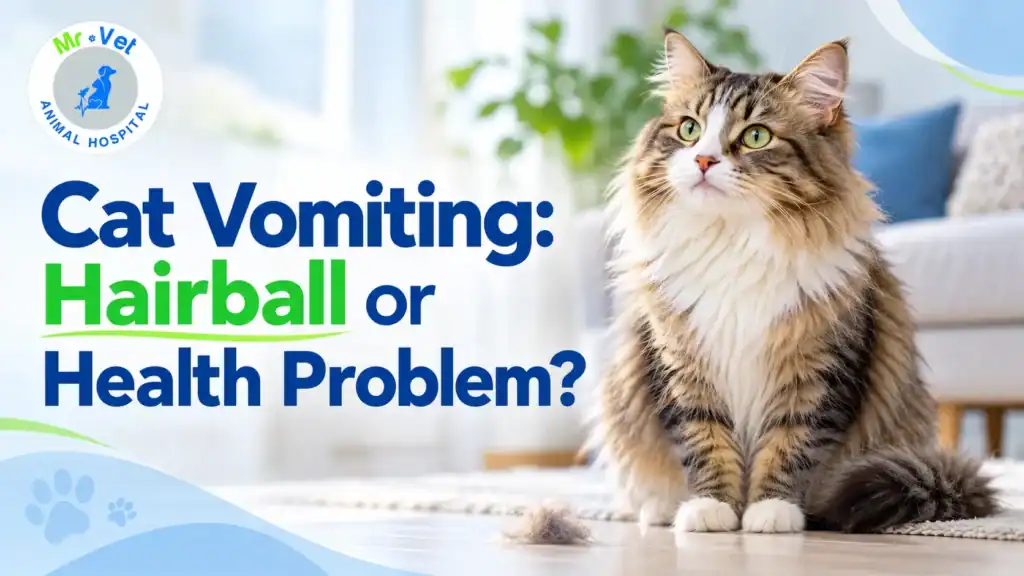
You hear your cat retching in the next room and find a small, damp clump on the floor. Is it a hairball, or should you be worried?
Thank you for reading this post, don't forget to subscribe!An occasional hairball in a cat that is otherwise eating and behaving normally may not be an emergency. But repeated vomiting should not be dismissed as “just hairballs.” Contact a vet if your cat vomits frequently, seems weak, stops eating, or retches repeatedly without bringing anything up.
How can you tell if it is a hairball?
Cats swallow loose fur while grooming. Sometimes that fur collects and comes back up as a hairball. It usually looks like a damp, compact tube of hair, possibly surrounded by fluid or a little food. A cat may retch, bring it up, and then return to normal.
Look beyond what is on the floor. How often has this happened? Is your cat eating, drinking, playing, and using the litter tray as usual? Those details help a vet decide whether the episode needs investigation.
Is your cat coughing rather than bringing up a hairball?
A coughing cat can appear to be trying to produce a hairball, yet nothing comes out. Record a short video if the behaviour happens again; it can help your vet tell coughing from vomiting. If your cat is struggling to breathe, seek immediate veterinary care.
Why else might a cat vomit?
Hairballs are only one possibility. Cats may also vomit because of stomach irritation, parasites, infection, something they swallowed, a harmful substance, or an illness elsewhere in the body. The appearance of the vomit alone cannot reliably identify the cause.
If food comes back up soon after eating without obvious heaving, it may be regurgitation rather than vomiting. Tell your vet what you observed, or show them a video if you have one.
When should you call a vet?
Seek urgent veterinary advice if your cat:
- Vomits repeatedly or cannot keep water down.
- Has blood in the vomit, becomes weak, or appears to have a painful abdomen.
- Keeps retching without producing anything.
- May have swallowed string, a toy, medicine, or a toxic substance.
- Appears to have difficulty breathing.
Arrange a veterinary assessment if vomiting keeps coming back, hairballs become frequent, or you notice weight loss, reduced appetite, diarrhea, unusual thirst, or changes in urination. Cats can have more than one symptom, and the pattern is often more useful than a single episode.
What should you do after one episode?
If your cat brings up a hairball once and seems completely well afterward, monitor them closely. Note the time, photograph what came up if possible, and watch their appetite, energy, drinking, and litter-tray use.
Do not give human medication or try to make your cat vomit. If you suspect poisoning or a swallowed object, call a vet immediately for instructions. Ask your vet before using a hairball product, especially when you are unsure what is causing the vomiting.
How is frequent vomiting treated?
A veterinarian will ask about your cat’s symptoms, diet, grooming, and possible access to string, plants, medicines, or other objects. After examining your cat, they may recommend blood or stool tests or imaging.
Treatment depends on the cause. It may involve fluids, medicine for nausea, changes to feeding, treatment of an underlying illness, or urgent care for a blockage. Treating every episode as a hairball could delay care for a different problem.
Can you prevent hairballs?
Regular brushing removes loose fur before your cat swallows it. It can be especially helpful when your cat is shedding more than usual. If hairballs remain frequent, ask your veterinarian whether a specific diet or hairball product is appropriate. Frequent vomiting still needs assessment, even when hair is present.
If you are unsure whether your cat has a hairball or a health problem, contact Mr. Vet Hospitals in Hyderabad for veterinary advice. If your cat has repeated unproductive retching, breathing difficulty, marked weakness, or suspected poisoning, seek care immediately.
FAQs:
Are hairballs normal in cats?
An occasional hairball can happen. If your cat brings them up frequently or vomits repeatedly, speak with a veterinarian.
Why does my cat retch but no hairball comes out?
Repeated retching without producing a hairball should be checked. Your cat may also be coughing rather than retching. Seek immediate help if their breathing seems difficult.
Why is my cat vomiting food after eating?
There are several possible causes. Food that comes back up without heaving may be regurgitation. Note how soon it happens after eating and describe the episode to your vet.
Can an indoor cat have hairballs?
Yes. Indoor cats also swallow fur while grooming. Regular brushing may reduce the amount they ingest.
Should I worry if my cat vomits but still eats normally?
A normal appetite is reassuring, but recurring vomiting deserves a veterinary assessment, even if your cat seems well between episodes.
What should I tell the vet?
Share how often your cat vomits, whether you see hair, what happens before the episode, and any changes in appetite, weight, thirst, or litter-tray habits. A photo or video may help.