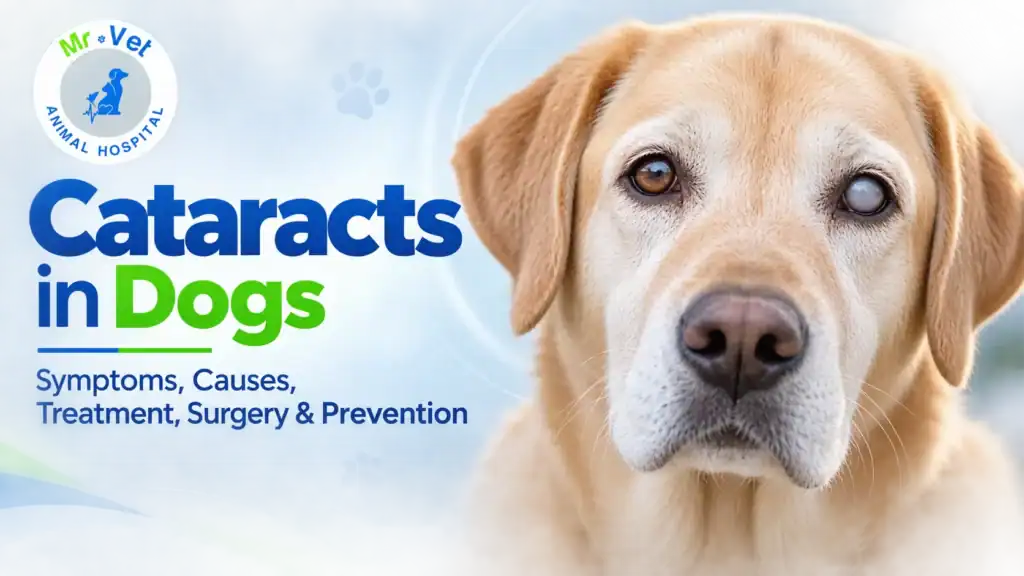
If you notice a white, grey, or bluish cloudiness in your dog’s eyes, cataracts may be one possible cause. Cataracts in dogs can gradually interfere with vision and, in advanced cases, cause blindness. They can also be associated with painful eye complications such as inflammation and glaucoma, so changes in your dog’s eyes should not be ignored.
Thank you for reading this post, don't forget to subscribe!The good news is that many dogs with cataracts can be evaluated for treatment, and cataract surgery may restore functional vision in suitable patients. Early veterinary assessment is important because the cause, stage of the cataract, retinal health, and overall health of the dog all influence treatment decisions.
This guide explains the symptoms, causes, stages, diagnosis, treatment, cataract surgery, prevention, and emergency warning signs every dog parent should know.
What Are Cataracts in Dogs?
A cataract is a clouding or opacity of the lens inside the eye. The normal lens is transparent and helps focus light onto the retina. When the lens becomes cloudy, less light reaches the retina, which can cause blurred vision and eventually significant vision loss.
Cataracts may affect:
- One eye or both eyes
- A small portion of the lens or the entire lens
- Puppies, adult dogs, or senior dogs
- Vision gradually or, in some cases, relatively quickly
Not every cloudy-looking eye is a cataract, however. Nuclear sclerosis, a common age-related change in older dogs, can also make the eyes look bluish-grey but is different from a cataract and usually has much less effect on vision.
Cataracts vs. Nuclear Sclerosis
| Cataracts | Nuclear Sclerosis |
| Cloudiness occurs in the lens | Lens becomes denser as part of ageing |
| Can significantly reduce vision | Usually has little effect on vision |
| May progress to blindness | Generally does not cause blindness |
| Can cause secondary inflammation and glaucoma | Usually considered a normal ageing change |
| Surgery may be considered when appropriate | Usually does not require surgery |
Because these conditions can look similar to an owner, a veterinary eye examination is the safest way to determine what is happening.
What Do Cataracts in Dogs Look Like?
The most noticeable sign is often a cloudy, milky-white, grey, or bluish appearance inside the eye. However, cataracts can begin subtly, and dogs may compensate for reduced vision using their hearing and sense of smell.
You may notice:
- Cloudy or white-looking eyes
- Difficulty seeing in unfamiliar places
- Bumping into furniture or objects
- Hesitation on stairs
- Reluctance to jump onto furniture
- Difficulty finding toys
- Reduced confidence in dim lighting
- Changes in navigation around the home
- Squinting or rubbing the eyes if inflammation or another painful eye condition is present
A dog does not necessarily become completely blind as soon as a cataract appears. The effect on vision depends on how much of the lens is affected and how the cataract progresses.
Symptoms of Cataracts in Dogs
Early symptoms
Early cataracts may cause few obvious changes. You might simply notice a small area of cloudiness or subtle changes in how your dog moves around.
Moderate vision loss
As the cataract becomes larger, your dog may:
- Misjudge distances
- Hesitate before climbing stairs
- Bump into unfamiliar objects
- Have difficulty locating toys
- Become less confident in new environments
Advanced cataracts
A mature cataract can severely interfere with the passage of light and may result in near-complete or complete loss of useful vision. Advanced cataracts can also be associated with inflammation inside the eye.
What Causes Cataracts in Dogs?
There isn’t one single cause of cataracts. A veterinarian may need to investigate both eye-related and systemic causes.
1. Hereditary or Genetic Cataracts
Genetics is an important cause of cataracts in dogs. Certain breeds have a higher predisposition to inherited cataracts. Reported predisposed breeds include:
- Cocker Spaniels
- Miniature Schnauzers
- Poodles
- Boston Terriers
- Labrador Retrievers
- Golden Retrievers
- Siberian Huskies
- Australian Shepherds
- Staffordshire Bull Terriers
- Welsh Springer Spaniels
The age at which hereditary cataracts appear can vary considerably between breeds.
2. Diabetes and Diabetic Cataracts
Diabetes mellitus is one of the most important systemic conditions associated with cataracts in dogs. High blood glucose can alter the metabolism and fluid balance of the lens, leading to lens swelling and opacity. Diabetic cataracts can develop relatively quickly.
If your dog develops cataracts together with:
- Increased thirst
- Frequent urination
- Increased appetite
- Unexplained weight loss
your veterinarian may recommend testing for diabetes.
3. Eye Trauma
An injury to the eye can damage the lens and result in a traumatic cataract.
4. Inflammation Inside the Eye
Conditions such as uveitis can contribute to cataract formation. Inflammation associated with advanced cataracts can also become a problem in its own right.
5. Age-Related Changes
Older dogs can develop different lens changes, including cataracts. However, age-related nuclear sclerosis should not automatically be mistaken for cataracts. A veterinary examination is needed to distinguish them.
6. Other Medical Conditions
Certain metabolic disorders, low blood calcium, retinal disease, nutritional problems, radiation exposure, and other conditions have been associated with cataract formation in dogs.
Stages of Cataracts in Dogs
Veterinarians may classify cataracts according to how much of the lens is affected.
Incipient cataract
Only a small portion of the lens is affected. Vision may remain normal.
Immature cataract
A larger portion of the lens becomes cloudy, and vision can become impaired to varying degrees.
Mature cataract
The lens is extensively or completely opaque, potentially causing severe vision loss or blindness.
Hypermature cataract
An advanced cataract can undergo changes such as lens shrinkage and may be accompanied by inflammation inside the eye.
Important: The stage alone does not determine whether surgery is appropriate. A veterinary ophthalmic examination is needed to assess the individual dog.
How Are Cataracts in Dogs Diagnosed?
Your veterinarian will examine the eyes and assess your dog’s vision and general health.
Depending on the case, evaluation may include:
- Detailed eye examination
- Pupil and vision assessment
- Examination of the lens and other eye structures
- Eye pressure measurement
- Blood tests
- Diabetes testing when indicated
- Assessment of the retina
- Additional ophthalmic tests before surgery
A detailed examination is particularly important because cloudy eyes can have causes other than cataracts, and cataracts can occur alongside other eye diseases.
Cataract Treatment for Dogs
The appropriate treatment depends on the cause, severity, progression, vision, eye health, and overall health of the dog.
Can Cataracts in Dogs Be Cured With Eye Drops?
No proven eye drop can remove an established cataract or reliably reverse it.
Some products marketed online claim to dissolve or cure cataracts, but veterinary ophthalmology sources do not support these products as a proven way to reverse canine cataracts.
Medication may nevertheless be prescribed in specific situations to manage inflammation or other complications associated with cataracts.
Do not put human eye drops or leftover veterinary medication into your dog’s eyes unless your veterinarian specifically recommends it.
Cataract Surgery for Dogs
For dogs that are suitable candidates, surgical removal of the cataract is the definitive treatment for restoring vision affected by the cataract. The commonly used procedure is called phacoemulsification.
During phacoemulsification, specialized equipment is used to break up and remove the cloudy lens. An artificial intraocular lens may then be placed to help restore focusing ability.
When is cataract surgery recommended?
Surgery is not automatically necessary for every dog with a cataract.
A veterinary ophthalmologist considers factors such as:
- How much vision has been affected
- Cataract stage and progression
- Retinal health
- Presence of inflammation
- Eye pressure
- Other eye diseases
- Diabetes or other systemic conditions
- Overall health and anaesthetic suitability
Early assessment can be valuable because advanced cataracts may be associated with complications such as inflammation and glaucoma.
Can cataract surgery restore a dog’s vision?
Cataract surgery can restore functional vision in appropriately selected dogs when the retina and other important structures are healthy. Reported outcomes for uncomplicated surgery are generally favorable, although surgery carries potential complications and is not suitable for every patient.
What Happens After Dog Cataract Surgery?
Post-operative care is an important part of the treatment.
Your veterinarian may prescribe:
- Several types of eye medication
- Anti-inflammatory treatment
- Protective measures to prevent rubbing
- Follow-up examinations
- Activity restrictions during healing
Your dog may need an Elizabethan collar or other protective device to prevent scratching or rubbing the operated eye. Follow every post-operative instruction carefully.
If your dog develops increasing redness, significant pain, worsening vision, discharge, swelling, or another sudden change after surgery, contact the veterinary team promptly.
Can Cataracts in Dogs Be Prevented?
Not all cataracts can be prevented, particularly those caused by inherited factors.
However, responsible pet care can help identify associated problems early:
Keep diabetes under veterinary control
Because diabetes is strongly associated with canine cataracts, dogs diagnosed with diabetes need appropriate veterinary monitoring and treatment.
Protect your dog’s eyes
Reduce the risk of eye trauma and seek veterinary attention after an eye injury.
Schedule routine veterinary examinations
Regular check-ups can help identify changes in the eyes or other health problems before they become more advanced.
Don’t ignore cloudy eyes
A cloudy eye is not always “just old age.” Cataracts, nuclear sclerosis, glaucoma, corneal disease, and other conditions can have different treatments.
When Are Cataracts in Dogs an Emergency?
A cataract itself may develop gradually, but some signs accompanying a cloudy eye can indicate a painful or urgent eye problem.
Seek prompt veterinary attention if your dog develops:
- Sudden vision loss
- Severe eye pain
- Persistent squinting
- Significant redness
- A bulging or enlarged-looking eye
- Sudden severe cloudiness
- Excessive tearing
- Repeated pawing or rubbing of the eye
- Eye trauma
- Sudden deterioration in an eye that already has a cataract
Glaucoma can be painful and may occur as a complication of advanced lens disease, so sudden painful eye changes should not be watched at home.
Cataracts in Dogs: What Should Pet Parents Do?
If you notice that your dog’s eye is becoming cloudy, don’t try to diagnose the cause from appearance alone.
The practical next step is:
- Arrange a veterinary eye examination.
- Determine whether the cloudiness is actually a cataract.
- Identify any underlying disease, such as diabetes, when appropriate.
- Assess whether the cataract is progressing.
- Discuss monitoring, medical management, or surgical options based on your dog’s individual condition.
For pet parents in Hyderabad, early veterinary evaluation is especially worthwhile when a dog has noticeable eye cloudiness or changes in vision. Mr. Vet Hospitals can be considered for a veterinary assessment and guidance on the appropriate next step for your pet.
Protect Your Dog’s Vision With Early Veterinary Care
Cataracts in dogs can range from a small, incidental lens opacity to a condition that significantly affects vision and may lead to painful complications. The earlier the eye is examined, the better your veterinarian can determine the cause, monitor progression, and discuss appropriate treatment options.
If you have noticed cloudy eyes, changes in your dog’s vision, or difficulty navigating familiar surroundings, consider arranging a veterinary examination at Mr. Vet Hospitals, Hyderabad rather than waiting for the problem to become severe.
1. What are the first signs of cataracts in dogs?
The first noticeable sign may be cloudiness or a white/grey appearance within the eye. Some dogs also develop subtle vision problems, such as hesitation on stairs or difficulty navigating unfamiliar surroundings.
2. Can cataracts make a dog blind?
Yes. If a cataract becomes sufficiently advanced, it can block light from reaching the retina and cause severe vision loss or blindness.
3. Are cataracts in dogs painful?
The cataract itself does not necessarily cause pain. However, advanced cataracts can be associated with inflammation and complications such as glaucoma, which can be painful.
4. Can dog cataracts be treated without surgery?
There is no proven medical treatment that removes an established cataract. Depending on the case, medication may be used to manage inflammation or other complications, while suitable dogs may be considered for cataract surgery.
5. What is the best treatment for cataracts in dogs?
For a dog whose vision is significantly affected and who is an appropriate surgical candidate, cataract removal by phacoemulsification is the definitive treatment intended to restore functional vision. Suitability must be determined through an eye examination and appropriate pre-operative testing.
6. Are cloudy eyes in older dogs always cataracts?
No. Older dogs commonly develop nuclear sclerosis, which can cause a bluish-grey appearance but is different from cataracts. A veterinarian should examine the eye to distinguish the two.
7. Can diabetes cause cataracts in dogs?
Yes. Diabetes mellitus is strongly associated with cataract formation in dogs, and diabetic cataracts can develop relatively quickly.
8. Should I take my dog to a vet for a cloudy eye?
Yes. Any new change in your dog’s eye colour, clarity, vision, or comfort deserves veterinary assessment. Sudden cloudiness, severe pain, redness, bulging, or sudden vision loss should be treated as urgent.