
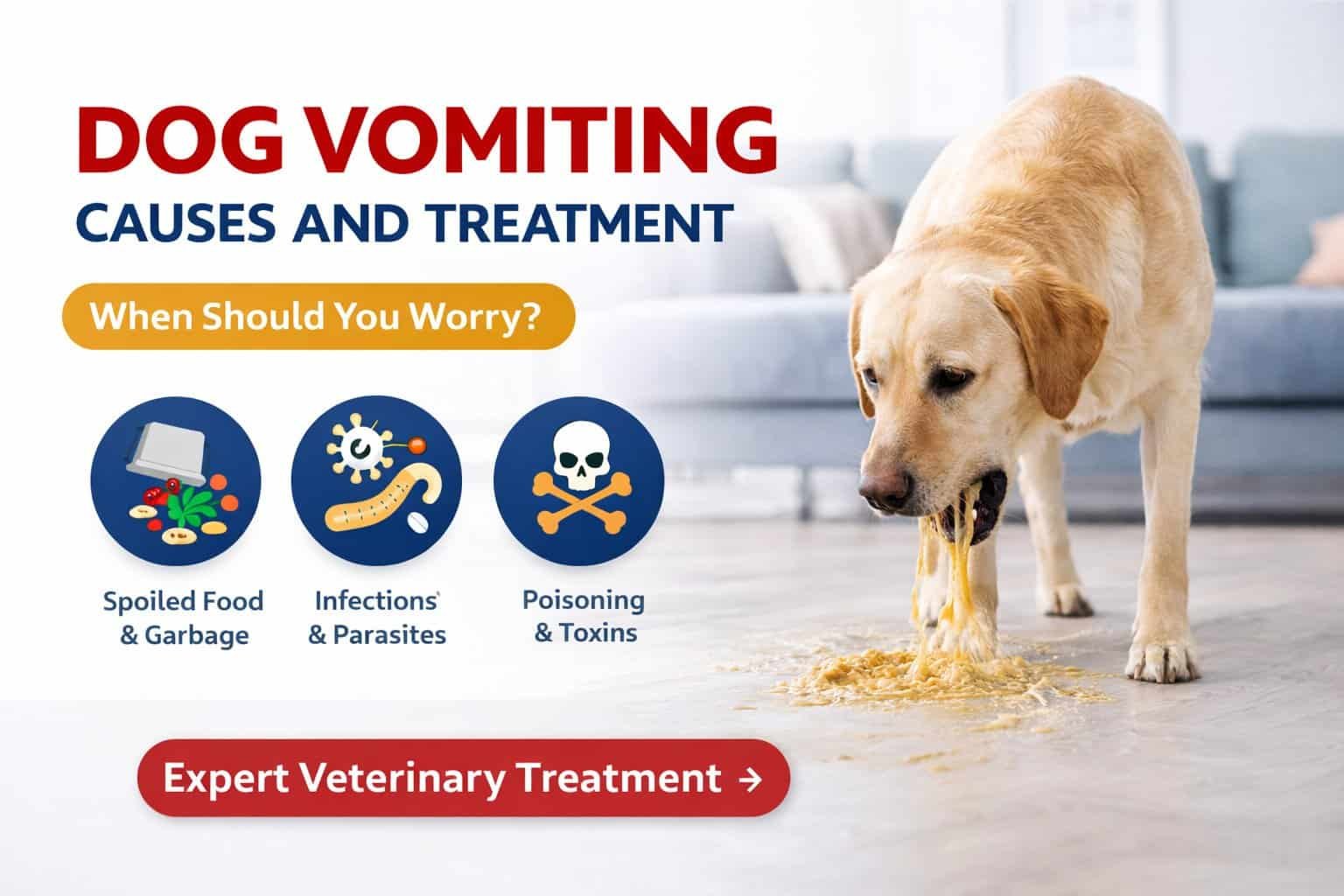
Vomiting is one of the most common health problems seen in dogs. While occasional vomiting may not be serious, frequent vomiting can indicate underlying health issues.
Thank you for reading this post, don't forget to subscribe!Understanding dog vomiting causes helps pet owners identify whether their dog requires medical attention.
Veterinarians recommend monitoring vomiting symptoms carefully to determine when treatment is necessary.
Dogs may vomit for several reasons ranging from minor digestive upset to serious diseases.
Common dog vomiting causes include:
Determining the underlying cause helps veterinarians provide the correct treatment.
Dogs often eat inappropriate items such as garbage or spoiled food.
This can irritate the stomach and lead to vomiting.
Some dogs develop allergies to specific ingredients in their diet.
Symptoms include:
Dietary adjustments may help manage allergies.
Infections caused by viruses or bacteria can lead to vomiting.
Examples include:
These infections require veterinary treatment.
Pancreatitis occurs when the pancreas becomes inflamed.
Symptoms include:
This condition requires medical management and dietary changes.
Many pet owners notice dog vomiting yellow foam, which often occurs when the stomach is empty.
Possible causes include:
Feeding smaller meals more frequently may help reduce bile vomiting.
Some symptoms indicate a dog vomiting emergency.
Seek veterinary care if your dog experiences:
These symptoms may indicate serious diseases.
Emergency veterinary services are available
Veterinarians diagnose vomiting using:
These tests help identify underlying health problems.
Treatment depends on the underlying cause.
Common dog vomiting treatment options include:
Early diagnosis improves recovery.
For mild vomiting cases, pet owners can:
However, persistent vomiting requires veterinary care.
Preventive measures include:
Maintaining good digestive health reduces vomiting risk.
Understanding dog vomiting causes helps pet owners determine when vomiting is serious.
While mild cases may resolve quickly, persistent vomiting requires professional veterinary treatment.
Early diagnosis ensures the best outcome for your pet.